
















Russian investigators have disclosed that the crew of an Angara Airlines Antonov An-24 muted the ground-proximity warning system before a fatal terrain collision on approach to Tynda airport.
The Interstate Aviation Committee’s inquiry into the accident, on 24 July last year, found that the crew had set the altimeter pressure reference to the sea-level QNH but were following a flightpath with height references based on airport-level QFE.
This meant the An-24 was actually flying 600m lower than the crew believed, resulting in its colliding with trees and the ground as it attempted to join the approach path to Tynda’s runway 06.
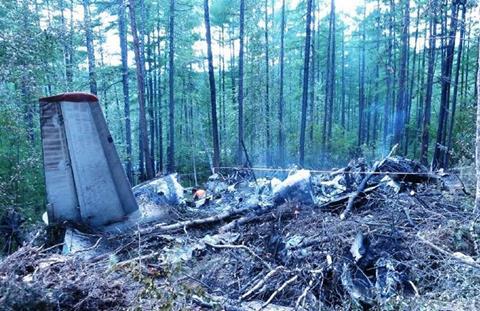
While the inquiry had previously indicated that the ground-proximity warning system had sounded prior to the crash, the final analysis found that this alert began just 3.7s before the impact – and that the system should have warned the crew earlier.
“No other vocal messages from the [terrain warning system] were captured by the cockpit-voice recorder [beforehand],” it states.
Investigators requested that the system’s developer conduct a simulation of the final stages of the flight to explain the absence.
This work involved assessing the equipment in various modes and configurations.
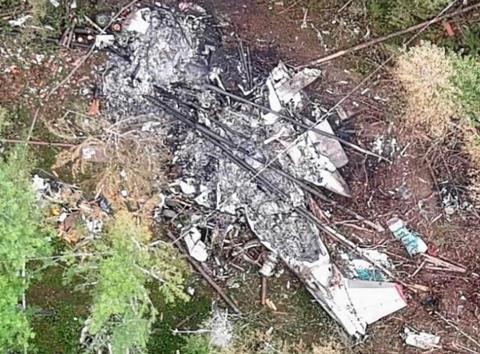
Simulations determined that the system “should have generated” a visual and audible alarm about 5min before the collision, says the inquiry, when the aircraft descended below 800m relative to the QNH reference.
But no audible warning was heard, it states, which “most likely” indicates that the crew inhibited the alert with a ‘lock’ button on the instrument panel.
Although the system issued an audible warning just a few seconds before the impact, the inquiry indicates that this was the result of operating logic, which automatically cancels the inhibition below 15m radio-altimeter height, or when the landing-gear makes runway contact.
It points out that the An-24 struck trees at the top of a hill at a height of about 15m, adding that the landing-gear compression switch could also have been activated by the impact of the aircraft’s wheels.
The Interstate Aviation Committee says de-activation of the ground-proximity warning system, or suppression of its signals, during flight is prohibited.
None of the 48 occupants survived the accident. Angara Airlines was subsequently grounded in November last year after a series of regulatory inspections uncovered a number of safety concerns.