













UK investigators believe an undershot landing by a Shorts 360 freighter in the British Virgin Islands resulted from an unstable approach in the vicinity of thunderstorm activity.
But a full determination of the circumstances was thwarted by a two-month delay in notifying the Air Accidents Investigation Branch of the seriousness of the occurrence. The investigation authority states that the event could have resulted in the destruction of the aircraft.
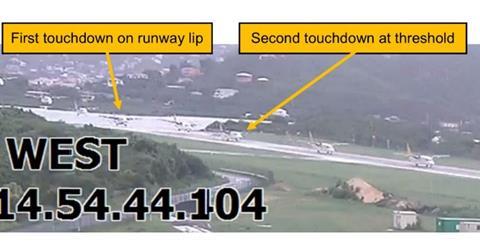
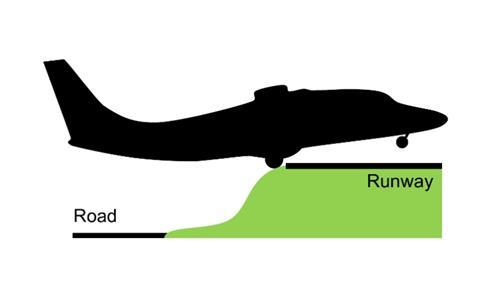
While arriving on 6 November last year, the aircraft struck the lip of runway 07 at Lettsome airport, some 150m short of the threshold, and bounced before touching down close to the threshold.
But despite damage to runway lighting – and evidence of damage to the perimeter fence – the crew was unaware that the aircraft had struck anything.
No damage to the 360 was found during turnaround and the aircraft carried out a return flight to its base. During subsequent maintenance, contact marks were discovered on the left main-gear tyre that required its replacement.
Inspection of the airfield on the day of the event found a frangible light missing from the runway undershoot area, as well as damage to the boundary fence – the top of which lies just below the paved runway surface. Tyre marks were also found on the extreme end of the runway, which is 25m from the sea.
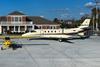
Airfield authorities reviewed CCTV footage to understand the origin of the damage, and saw that the 360 – which bears the US registration N915GD – had landed short.
The crew testified on 8 November that the weather had been “marginal” with “rain on all quadrants”, and that the aircraft had “probably” experienced a downdraught or low-level windshear – to which the crew responded with “power to arrest the descent” before landing “slightly short of the numbers”.
But while the airfield duty manager submitted a mandatory occurrence report on 9 November, the occurrence was not classified as a serious incident until 6 January this year.
“This delay, combined with a paucity of information about the circumstances and handling of the event, made it difficult for the investigation to gain a detailed understanding of what transpired,” says the inquiry.
“It is unclear whether the [captain] attempted to rescue the unstable approach or whether his application of power was the initiation of an unsuccessful go-around.”
The limited evidence available indicates the aircraft was some 80ft below the normal approach path when it touched down, and its left main-gear assembly hit the runway light.
“While the perimeter fence was found broken, it could not be conclusively determined the damage resulted from contact with [the aircraft’s] landing-gear,” the inquiry says.
“Given the profile of the undershoot short of the paved runway surface, the aircraft would not have needed to be much lower on the approach for hull loss to have been a credible outcome.”
Meteorological analysis could not determine whether the thunderstorm activity directly affected the airfield, but the inquiry says turbulence and windshear could be expected near an active cumulonimbus cell.