












Technology start-up Skyryse is making its NBAA-BACE debut, demonstrating a touchscreen-based flight automation system over a decade in development which it says can make almost any fixed- or rotary-wing general aviation aircraft simpler and safer to operate.
SkyOS connects to flight computers and hardware, such as actuators and pedals to create a fly-by-wire cockpit. This significantly reduces pilot workload and even allows aircraft to be flown autonomously, according to the Californian company.
The technology is particularly advantageous in challenging conditions or missions, such as bad weather or aerial firefighting, says Warren Curry, vice-president at the privately funded, El Segundo-based business.
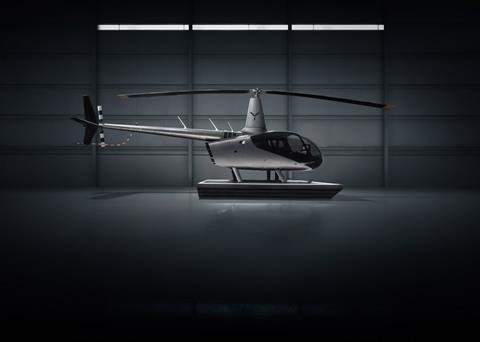
Skyryse has been working with Robinson Helicopter to install SkyOS on a series of R66 turbine-powered light-singles. Mechanical controls including pedals and levers are stripped out and replaced with touchscreen displays and a single control stick. It dubs the revamped helicopter the Skyryse One.
Skyryse says it has been working with the Federal Aviation Administration for several years on an approval path for the product, which is protected by 90 patents. It hopes to be awarded a supplemental type certificate next year to install the system through its maintenance, repair and overhaul partners.
Now, the company wants to promote the “platform agnostic” aspect of its system, including for retrofit in business aircraft and other fixed-wing types. “It’s an opportunity to show that demographic that our technology can work in almost any aircraft,” says Curry.
Although autopilots that simplify cockpit tasks have been available in general aviation for decades, they have not necessarily improved safety, according to Skyryse founder Mark Groden.This is because in GA aircraft they are typically mechanically attached to traditional flight controls that require constant human manipulation. In that way they are like cruise-control in a car.
“Drivers can take their foot off the pedal, but it does not make the operation of the vehicle any safer,” he says.Traditional autopilots also “take a pilot’s eyes from scanning outside to staring inside at various screens”. Additionally, “they don’t behave intuitively, turning left or right or going up and down for unknown reasons; an autopilot’s idea of two-way communications is a kill switch,” he says.
A further limitation is that they have single points of failure, states Groden. “When they encounter a form of adversity such as turbulence or mechanical failure, they will, without adequate warning, shut off and hand the aircraft back to the pilot for them to handle what is likely a precarious situation.”
By contrast, SkyOS’s “triply redundant” fly-by-wire architecture gives the pilot “a stable flight in all phases, from take-off to landing, and in challenging conditions including turbulence, low visibility, and crosswinds”.
According to Groden, “the stability of heading, altitude, and vertical speed is always guaranteed, to a level only seen in the most modern commercial or military aircraft”.
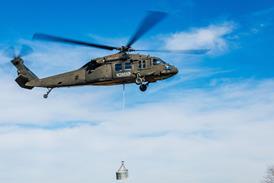
In July, Skyryse announced a partnership with the California Department of Forestry and Fire Protection (Calfire) to install SkyOS on its Sikorsky S-70i Firehawks as part of a project to look into how using autonomous assets might improve the response to wildfires.
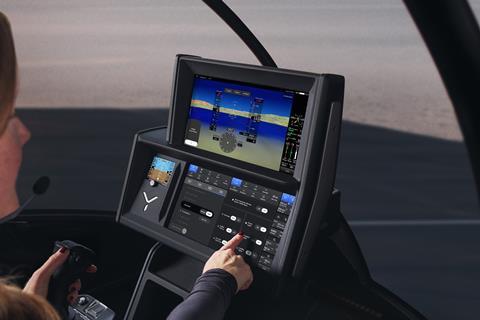
Last month, Skyryse unveiled an enhancement to its SkyOS with an artificial intelligence “flight assistant”. Skylar will further reduced workloads for pilots, including by transcribing and interpreting air traffic control communications, adapting flightplans, monitoring weather, and automating checklist procedures.
As it shows its technology at NBAA-BACE for the first time, Skyryse, which has around 150 employees, most of whom are engineers, will be hoping to convince business aviation manufacturers and operators of its benefits.
Says Curry: “Our mission is to bring higher levels of safety to aviation by providing a solution to cognitive overload through greater degrees of autonomy.”