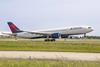













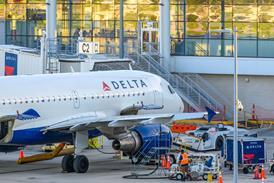
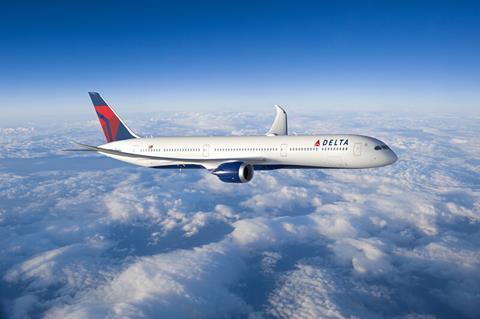
Delta Air Lines’ first-ever order for Boeing 787 Dreamliners is part of a long-term widebody fleet renewal plan to replace its ageing 767s.
The Atlanta-headquartered carrier disclosed the deal – which includes 30 firm orders for 787-10s, with an additional 30 options – on 13 January, with executives outlining the company’s broader fleet strategy during a call with investors later that day.
“I think it’s a natural evolution of our fleet,” says Joe Esposito, Delta’s chief commercial officer. ”When you think about our priorities up to this point, [they were] to get critical mass itno the A350 and A330, and we’re still on our way to do that.
“That drives great efficiency, and that efficiency is needed in the widebody category.”
Enter Delta’s 767 replacement plans. It currently operates 57 of the twin-engined widebody jets, which range in age from 24 to 36 years old, according to aviation analytics firm Cirium.
Of Delta’s 767 mix, 37 of the ageing widebodies are -300 variants, and the remaining 20 are -400s.
“When we look out in the future, the 787 is… financially a great airplane,” Esposito says. ”We’re able to do a lot with the -10 version of this on premium seating. It’s a great cargo airplane, and it also drives diversification within our fleet, both not only on the airframe but on the engine side.
“So, it’s a natural fit, especially when it starts to replace the 767-400, which it’s slated to do,” he adds. “When you think about swapping a 767-400 or 767-300 to a 787-10, it’s a very powerful change in step function improvement and margin.”
Company executives say that new widebody aircraft will deliver a profit-margin boost of up to 10 percentage points over the 767, thanks to fuel efficiency gains and increased cargo capabilities.
“Today’s Boeing 787 order enhances diversity of our widebody orderbook while creating cost-efficient scale across all widebody fleets,” says Dan Janki, Delta’s chief financial officer.
Chief executive Ed Bastian says 787-10 deliveries are expected to begin in 2031. The incoming aircraft stand to “enhance our network, deliver superior economics and extend our long-haul capabilities”.
Delta’s current long-haul fleet includes and Airbus A330neos and A350-900s, with 20 A350-1000s also on order.
The airline anticipates capital expenditures exceeding $5.5 billion in 2026, covering 50 new aircraft deliveries and investments in technology and customer experience upgrades.