
















Denmark is lauding the ability of a new Arctic-focused special forces unit to operate anywhere in the harsh terrain of Greenland, which is at the centre of an international crisis.
Seeking to burnish its military credentials, Copenhagen has surged troops and aircraft to Greenland after US President Donald Trump questioned Denmark’s ability to control and defend the strategic island territory.
Trump has said Washington will seek to take control of Greenland, either by purchasing the autonomous territory from Denmark or by another, unspecified means.
In response, Danish fighter jets, supported by a French tanker, have already begun patrolling Greenland’s coast, while transport aircraft are landing ground personnel in the capital Nuuk for what Copenhagen is describing as readiness exercises.
Several European allies including France, Germany, the Netherlands, Norway, Sweden and the UK have pledged to send their own forces.
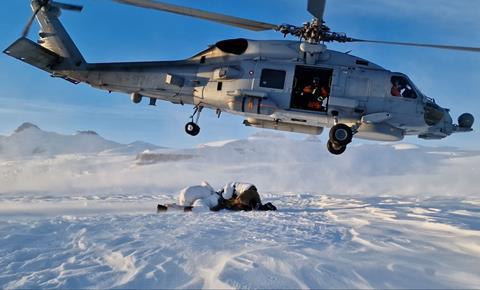
But another contingent of Danish troops, supported by rotary-wing aircraft, were already venturing into Greenland’s mountainous, ice-covered interior before the current crisis began.
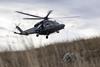
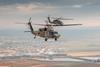
Copenhagen on 20 January revealed that a newly formed Arctic speciality team within the army’s Jager Corps special forces began training in Greenland’s “most demanding conditions” last October. The commandos traversed the mountains and ice sheets inland of the Blosseville Coast in eastern Greenland via ski, while being supported by Sikorsky MH-60R maritime helicopters from the Royal Danish Air Force.
“Historically, this area has not been patrolled by the Danish Armed Forces,” says Major General Soren Andersen, head of Denmark’s Arctic Command.
“The purpose of the operation was therefore to patrol and assess the area – and to deploy a patrol specifically in October, when conditions are particularly challenging,” he adds.
In Washington, Donald Trump has cast doubt on the ability of Denmark to effectively defend Greenland, which the president has described as essential to US national security – although largely without elaborating.
A 1951 agreement between Washington and Copenhagen already allows the US to establish and operate military bases in Greenland. The American footprint on the island has steadily diminished from a Cold War height of 17 active bases to a single facility now – reductions made voluntarily by Washington.
Trump has cited Greenland as key to the so-called “Golden Dome” anti-ballistic missile defence programme currently in the early stages of development.
The president has also disparaged Denmark’s military footprint in its semi-autonomous Arctic territory for including dogsled teams.
Those troops are in fact an elite unit of the Danish army known as Sirius Patrol, from which the new Arctic special forces were drawn.
“The Arctic specialists can move, patrol, and solve tasks where the cold, ice, storms, and extreme remoteness turn even simple tasks into complex challenges,” says Christopher Sohl, acting commander of Sirius Squadron.
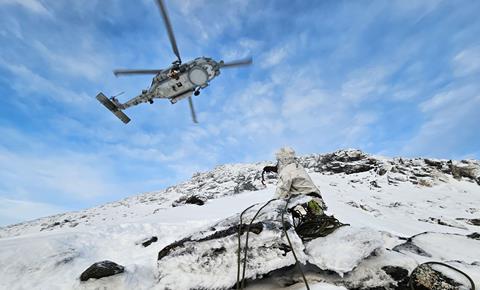
In October, the unit was deployed to assist Greenland police in responding to the crash of a small aircraft on Sermitsiaq Island. During that operation, Arctic specialists recovered the deceased pilot, electronic equipment and other effects from the crash site.
The cold weather commandos have also been using their forays into the Greenlandic interior to develop detailed maps of the Blosseville Coast region, including suitable landing zones for helicopter insertions.
“If the Danish Armed Forces need to conduct an operation in the area in the future, concrete terrain knowledge now exists,” says Sohl.
Copenhagen says the new Arctic speciality force represents the “need to build combat power” amidst an “evolving security environment”.
Multinational military exercises dubbed Operation Arctic Endurance are set to take place throughout 2026 between Denmark and NATO partners – for now notably absent the US military.
However, on 19 January the joint US-Canada North American Aerospace Defense Command (NORAD) said military aircraft are deploying to the lone American base in Greenland as part of “long-planned NORAD activities” that have been coordinated with Denmark.