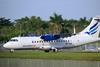














The crew of a Sharp Airlines Fairchild SA227 freighter took off without removing the aircraft’s two pitot tube covers, resulting in faulty airspeed indications.
The incident occurred during the early evening of 10 February 2025, as the aircraft (VH-UZN) departed from Townsville Airport to Brisbane in darkness and rain, according to the Australian Transport Safety Bureau.
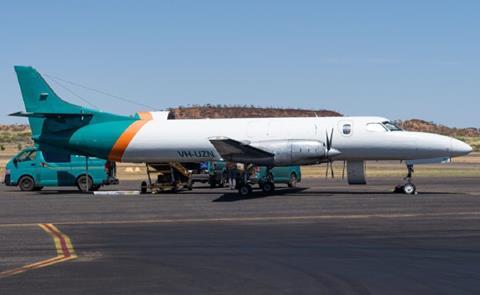
Prior to departure, the ATSB found, the first officer conducted an external inspection of the aircraft, removing the engine bungs and static port covers. They were not, however, tall enough to reach the pitot tube covers.
“This was communicated to the captain, who advised they would remove them, however, the captain subsequently forgot,” according to the ATSB’s final report, which designates the incident as “serious”.
Because the aircraft taxied to the runway in darkness and heavy rain the crew were unable to observe the pitot tube covers, as they might have done during the day.
As the aircraft took off both crew members observed that the airspeed indicators were rising slower than expected. The captain, concerned about the amount of runway remaining, opted to continue the take-off.
“During the climb, the first officer identified that the pitot tube covers have been left installed on the pitot tubes, which they announced to the captain,” says the report.
“The crew then returned the aircraft to Townsville for an uneventful landing.”
During the flight, the crew was able to use the Global Positioning System to measure their airspeed. In addition, the first officer’s airspeed indicator returned to normal, because the pitot tube cover on that side had disintegrated.
The ATSB attributed the incident to a memory lapse and incorrect assumptions. Prior to the flight that captain exited the aircraft and the first officer assumed they would get remove the pitot tube covers.
Moreover, prior to departure the first officer had observed ’remove before flight’ tags in the aircraft’s locker and incorrectly assumed that the pitot tube covers were among them.
Following the incident Sharp has updated operating procedures to clarify pre-flight inspections.
“This occurrence highlights the importance of conducting an airspeed check early in the take-off run and recognising that if this is not as expected that the take-off should be rejected,” says the ATSB.
“Flight crews should be aware of the typical symptoms associated with a blocked pitot tube, and that the airspeed may slowly increase.”
It adds that aircraft are inspections are a key element of controlling risks.
“If inspections are not done correctly, it increases the risk of defects not being identified and/or the aircraft not being correctly configured for flight.”
Only the pilot and first officer were aboard the aircraft during the incident flight.