














United Airlines is to trim its near-term capacity – by as much as five percentage points – as it anticipates a prolonged period of elevated fuel prices brought about by conflict in the Middle East.
In a note to employees, airline chief Scott Kirby says “our plans assume” that fuel prices will remain elevated (at around $175 a barrel) for the rest of the year and through 2027.
“If prices stayed at this level, it would mean an extra $11 billion in annual expense just for jet fuel. For perspective, in United’s best year ever, we made less than $5 billion,” Kirby writes.
To this end, he says the airline is “tactically pruning flying” that is “temporarily” unprofitable amid higher fuel costs. These include off-peak operations – such as red-eye flights – in the second and third quarter of this year.
The airline will also cut its operating capacity at Chicago by one percentage point, in line with flight caps imposed by the Federal Aviation Administration. United has also suspended its flights to Tel Aviv and Dubai, amid the ongoing Middle East crisis.
“There’s no point in burning cash in the near term on flying that just can’t absorb these fuel costs,” Kirby states.
Nonetheless, Kirby says the airline’s capacity plans for beyond 2027, as well as its fleet plans, remain unchanged.
He stresses that the airline will not be “cost cutting or deferring investments in the future”.
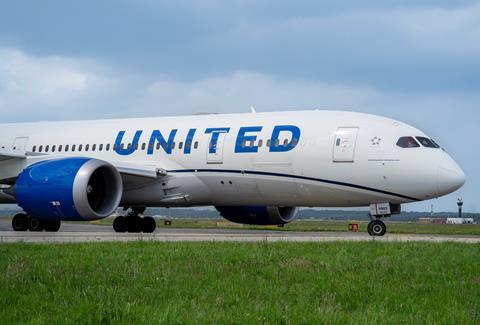
“We have the financial firepower to continue to stay focused on the long term. We will continue full speed ahead to take delivery of about 120 new aircraft this year, including 20 new 787s, and will take another 130 new aircraft by April 2028,” Kirby writes.
He also points out that demand “remains the strongest we’ve ever seen” in the near-term.
“[We] were better than any airline in the world during [Covid-19] at seeing over the horizon and making decisions earlier. That let us catapult out of the [Covid-19] crisis with the best growth and investment plan of any airline in the world,” he adds.
United is the first US major to outline its operating strategy for the near-term, as the airline sector grapples with the widening impact from the Middle East war.