










South Korea has clarified its position on the indigenous development of air-launched weapons for the developmental Korea Aerospace Industries (KAI) KF-21 fighter.

While Seoul will develop a range of air-launched weapons for the fighter, initially the jet will be armed with weapons obtained overseas, according to the Defense Acquisition Program Administration (DAPA).

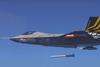
KF-21 KAI Dummy Meteor MBDA

Source: Defense Acquisition Program Administration

The second KF-21 prototype drops a Meteor dummy round over the East China Sea

Seoul has firm orders for 40 initial examples of the KF-21, which will enter Republic of Korea Air Force (ROKAF) service at the end of 2026.

“The overseas purchase of air-to-air missiles has been completed based on the budget for the entire first mass-produced KF-21 [fleet], starting in 2024,” says DAPA.

“This is an appropriate quantity considering research and development and follow-up projects.”

DAPA adds that budget has already been allocated for the development of both a short-range and long-range air-to-air missile for the KF-21. It dismisses recent reports that Seoul has abandoned the indigenous development of a supersonic anti-ship missile for the KF-21.

“In the case of the development of a supersonic air-to-ship missile, a feasibility study is currently underway, and once the study results are confirmed, we plan to proceed with the project in accordance with procedures in close consultation with relevant organisations,” says DAPA.

Air-to-ground weapons are also a focus area. In December 2022, DAPA said a long-range cruise missile would be developed for the KF-21

In late 2024, MBDA said it had secured a contract from Seoul for the production of an unspecified number of Meteor beyond-visual-range air-to-air missiles. Earlier reports had indicated that Seoul had planned to order 100 Meteors.

In late 2023, KAI and MBDA had entered a cooperation pact to explore the integration of weapons on KAI-produced aircraft. In addition to Meteor, weapons covered included the Spear precision glide weapon, ASRAAM infrared homing air-to-air missile, and Brimstone ground-attack missiles.

The KF-21 has undertaken tests with the Meteor missile as well as the Diehl Defence IRIS-T infrared-homing air-to-air missile.

DAPA also indicates that it sees the development of indigenous weapons as integral to the KF-21’s overseas sales proposition: “DAPA will actively strive to realise self-reliant national defence through rapid weapon system deployment and to expand exports of advanced weapons, enabling the Korean defence industry to leap forward as one of the world’s top four powers.”

South Korea recently said that it will fast-track plans to incorporate air-to-ground weapons on the KF-21, as KAI revealed an advanced KF-21EX concept.

LOCKHEED TO UPGRADE SOUTH KOREAN F-16 SIMULATORS

Lockheed Martin will upgrade the simulators for South Korea’s fleet of KF-16s, which are being upgraded to the F-16V standard.

The work will improve the fidelity of the simulators to better reflect environments that ROKAF pilots are likely to encounter.

“Maximum accuracy and realism in ground-based flight training is foundational to pilot safety and mission readiness,” says Todd Morar, vice-president of Air and Commercial Solutions at Lockheed Martin.

“As the manufacturer of all F-16 variants, Lockheed Martin uses the design and software data of the actual aircraft to deliver ground-based training experiences that are nearly identical to those in flight, while maintaining concurrency with the aircraft as technology evolves.”

The effort will cover nine simulators at South Korea’s Seosan and Chungju air bases. South Korea operates 118 F-16s, according to FlightGlobal’s 2025 World Air Forces directory.