













In a Senate confirmation hearing for his nomination as the next air force chief of staff, General Kenneth Wilsbach offered insights into how collaborative combat aircraft (CCA) will be integrated into the US Air Force (USAF), and shared views on other key topics.

Asked about CCAs, Wilsbach stressed that the USAF still has much learning to do, and that current thinking indicates that CCAs will likely be assigned to dedicated squadrons.

Wilsbach confirmation

Source: Senate Armed Services Committee

Wilsbach’s confirmation hearing was very cordial

“We have a lot of learning to do with these platforms,” he says.

“We’re thinking that they are not going to be embedded in current fighter squadrons but rather be their own squadrons and they’ll be dispersed. There will be a strategic basing process.”

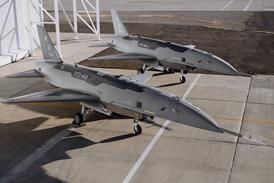
He notes, however, that CCA flight testing has only recently kicked off, with the General Atomics Aeronautical Systems YFQ-42A prototype logging its first flight in August. Its rival, the Anduril YFQ-44A, has yet to fly, though officials have said this milestone is approaching.

Wilsbach’s thinking on the issue of how CCAs will be deployed reflects the view of the Royal Australian Air Force (RAAF), which appears likely to obtain the locally developed Boeing MQ-28. The RAAF sees the type initially being deployed to dedicated to units, although later the unmanned jets could be added to existing manned fighter units.

Wilsbach’s interaction with the senators was cordial and they seemed positive about his nomination for the role.

He stresses that spare parts need to be more readily available for USAF units because this greatly improves aircraft availability for training. Four decades ago, at the outset of his USAF career, Wilsbach recalls flying four times a week, but says this has dropped to twice weekly for pilots in today’s air force.

“You don’t see professional athletes practicing two times a week,” he says. “They practice almost every day. Our pilots are flying two and half times a week in a fighter aircraft. That is not enough.”

In his last USAF role as the head of the Air Combat Command, Wilsbach had mandated that pilots fly three times weekly.

Wilsbach was also asked if the USAF’s fleet of fifth-generation aircraft, such as the Lockheed Martin F-35A and F-22, could execute all USAF missions without the support of fourth-generation platforms.

“Doubtful,” says Wilsbach.

“The fourth generation brings a lot of capability. The [Boeing] F-15 is an incredible workhouse. It’s going to be able to fire some of the more long-range weapons that don’t actually fit in the weapons bays of the fifth-generation aircraft. You can also use the fourth-gen for missions that don’t involve penetrating into a highly contested environment, like defensive counter-air, which tends to be defending your airbases, etcetera.”

He also observes that deliveries of the F-15EX have been delayed by industrial action at Boeing’s facilities in St. Louis.