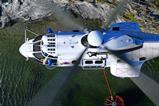













German researchers believe the addition of active twisting technology to helicopter main rotor blades can significantly improve performance while also cutting noise and vibration levels.
A recent round of windtunnel tests performed by Germany’s DLR aerospace research centre found that the technology reduced noise in a descent to landing by 7db – corresponding to more than half of the perceived noise – while vibrations were halved and rotor efficiency increased under high load.
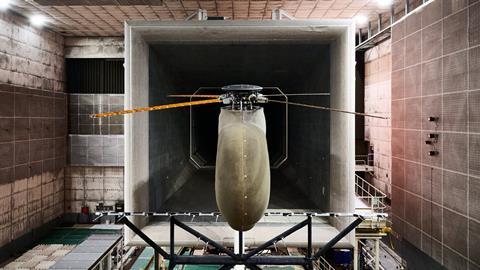
Working under a project called STAR – Smart Twisting Active Rotor – engineers integrated piezoceramic actuators into the blade surface.
These twist the blade when an electrical voltage is applied – statically with direct current and dynamically with alternating current.
Critically, the system requires no mechanical components and is only “minimally affected by the centrifugal forces acting on the rotor blades,” says Berend Gerdes van der Wall, project manager at the DLR’s Institute of Flight Systems.
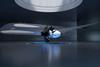
For the tests, the STAR team prepared a four-bladed active twist rotor with a 4m (13.1ft) diameter. It was then trialled in the large, low-speed windtunnel at a joint Dutch-German facility in the Netherlands over a three-week period in December 2025.
“During the measurement campaign, we were able to successfully test our concept in a realistic environment. The results show that efficiency increased while noise and vibration were significantly reduced,” says van der Wall.
In addition to rotor forces, moments and power, the team obtained significant amounts of data related to the motion of the blades and the forces acting on them, plus other aerodynamic factors.
This, says the DLR, will be used to validate computational models. The results can be applied to conventional helicopters, high-speed rotorcraft and urban air mobility concepts.
Besides the DLR, also collaborating on the project were NASA, the US Army, the French and Japanese aerospace research agencies ONERA and JAXA, the Korea Aerospace Research Institute and Konkuk University in Seoul.