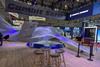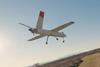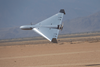














As part of its efforts to develop an uncrewed fighter jet, the US Navy (USN) is testing autonomous flight control software using target drones made by Kratos.
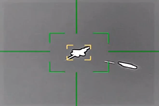
The service on 12 January said it had completed a second demonstration using the Kratos BQM-177 subsonic aerial target controlled by Shield AI’s Hivemind autonomy system.
The December 2025 event at the Point Mugu Sea Range in California featured both real and simulated aircraft, including two physical BQM-177s alongside one simulated Boeing F/A-18 and two adversary aircraft.
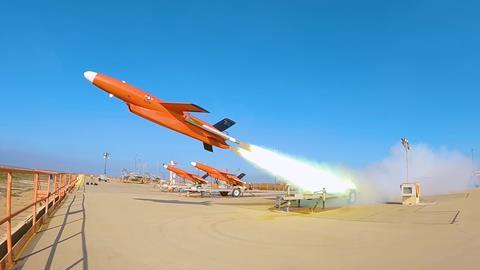
Using a networked simulation known as a live virtual constructive environment, the digital Super Hornet served as mission lead, directing the Kratos drones to act as a combat air patrol defending assigned locations.
When the simulated adversary aircraft attempted to move into those areas, the BQM-177s autonomously responded to the threat based on their pre-assigned mission tasking.
“This demonstration is an important step toward advancing autonomous capabilities for the fleet,” says Rear Admiral Tony Rossi, the navy’s programme executive officer for unmanned aviation and strike weapons.

The BQM-177s were notably beyond the visual range of remote managers for the flight.
“The use of surrogate platforms like the BQM-177A allows for rapid testing and improvement, providing a cost-effective alternative to operational platforms during early development phases,” the navy says.
Rossi adds that exercises like the one in California will set the stage for more complex operations and assist the USN in developing concepts for its future carrier air wings.
The physical tests with uncrewed aircraft follow recent navy exercises that saw Lockheed Martin F-35 pilots use flight simulators to experiment with novel tactics for deploying uncrewed tactical jets.
The various efforts also come as the US Marine Corps, which falls under the navy, last week issued a contract for its first uncrewed fighter – a derivative of the Kratos XQ-58A Valkyrie outfitted with mission systems and sensors from Northrop Grumman.
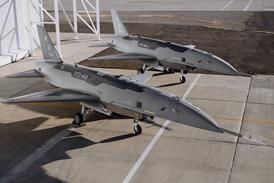
The US Air Force (USAF) is separately testing its own designs for autonomous fighters, including the General Atomics Aeronautical Systems YFQ-42A, Anduril Industries YFQ-44A and Northrop YFQ-48A.
Additional navy exercises are planned in 2026 involving the Shield AI autonomous control software, as the service moves toward developing its first prototype designs for a carrier-capable uncrewed fighter.
Hivemind has emerged as a popular choice for military operators and private aerospace firms seeking to develop autonomous aviation capabilities.
The artificial intelligence software has been applied to both fixed- and rotary-wing projects, including the X-62 fighter jet being used by the USAF to train algorithms on aerial combat manoeuvres.
The AI agent has shown the ability to adapt to adversary actions and even develop novel tactics, according to its developer.
In 2025, Shield AI unveiled its own fixed-wing tactical jet called the X-Bat, which will use a novel vertical take-off and landing configuration.