















EDGE’s Platforms & Systems cluster is behind some of the group’s leading products and brands and is central to its partnerships and organic expansion, says its president Khaled Al Zaabi
From armed loitering drones to armoured land vehicles, unmanned helicopters to aerostructures, EDGE’s Platforms & Systems cluster contains some of the group’s best-known brands, deepest expertise, and longest-established products – and its reach continues to grow.
In aerospace, ADASI has been producing uncrewed air systems for the UAE and overseas customers since 2007 – it became part of EDGE upon the latter’s creation as the UAE’s consolidated defence and security house in 2019.
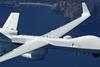
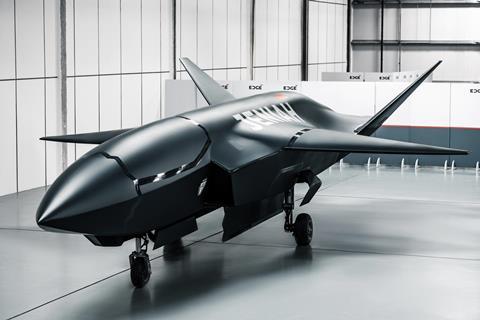
A pioneer in the segment, its line-up includes the JENIAH unmanned combat air vehicle, the SHADOW family of guided strike munitions/countermeasures drones, and surveillance platforms such as the GARMOOSHA.
In the land and sea domains, the cluster’s businesses span shipbuilding and ship repair through Abu Dhabi Ship Building (ADSB), to NIMR and AL JASOOR, makers of armoured vehicles. The EPI unit supplies structural parts for Airbus and Boeing airliners and is also a manufacturing components source for many EDGE products.
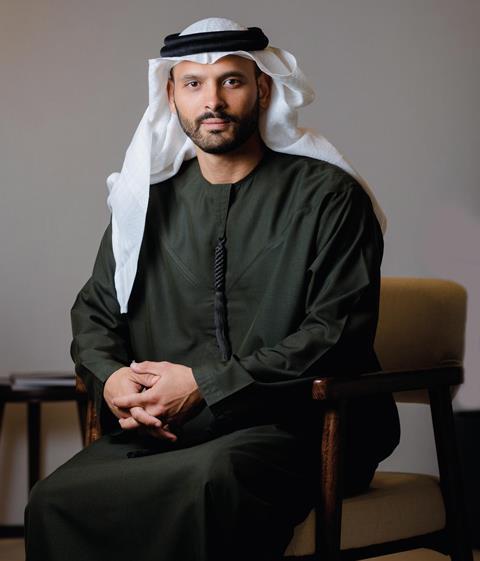
“Our aim is to have a very wide spectrum of solutions to meet a variety of challenges and use cases, and to have a high degree of competence in each one,” says Khaled Al Zaabi, the president of the cluster.
He notes that one of the keys to the cluster’s success is its vertical integration, with deep knowledge of design and integration as well as production, from parts to full assembly. “We have a good grasp of avionics and systems, and we have the know-how to develop platforms,” he says.
EDGE’s recent decision to launch its own propulsion business is part of that vertical integration philosophy. POWERTECH is close to certifying its first piston and turbojet engines and plans to launch volume production next year, with EPI making parts.
The intention is to create a sovereign capability in engine production in the UAE, with the potential of POWERTECH engines ultimately powering other OEMs’ products. However, the most important reason behind the launch is to secure supply for EDGE’s own platforms, maintains Al Zaabi.
“There are not that many third-party propulsion options out there, and most of those are working at capacity. Additionally, there are many hoops of export approvals to go through. Without us doing this, we would forever be a follower,” he says.
POWERTECH will empower EDGE’s designers to have “limitless imagination”, he states. “Currently, the first question engineers ask is what engine is available, and can they design a platform around it, instead of firstly looking at the challenge and then coming up with a solution. This will mean we hold our destiny in our hands.”
He accepts that “looking at it from the outside, the decision to launch our own engine company might seem brave or even crazy”, but he insists: “We have the right ingredients to venture into this area and the will to do it.”
The fact EDGE will initially be purchasing its own products helps. “Starting a propulsion company today without this would be impossible” says Al Zaabi. “You would need capex and instant demand. OEMs want to deal with companies with a proven track record. We start with a long backlog of orders from the internal customer.”
In terms of capability, it is also less of a leap in the dark than some might imagine. “We have been in the manufacturing industry with EPI for nearly 20 years and have a culture of precision manufacturing, so for us it is more of an incremental knowledge step,” he says.
And from a wider UAE point of view, Sanad, the Abu Dhabi-based commercial maintenance, repair and overhaul business which is owned by Al Zaabi’s former employer Mubadala, “already does very complex work on engines”.
The Platforms & Systems cluster has also been central to EDGE’s recent acquisition drive, as the group looks to diversify its suite of products and intellectual property and achieve industrial footholds in key export markets, including the USA and Europe.
In 2023, EDGE secured majority stakes in two European companies: MILREM ROBOTICS of Estonia, a specialist in autonomous and robotic ground systems, and Swiss-based ANAVIA, which makes remotely operated rotorcraft of up to 750kg.
“We were looking for companies that are doing something that we don’t do today,” says Al Zaabi. “There is a long list of products that we are already developing in ADASI, for example, but there are solutions that we don’t do.”
EXPORT STRATEGY
While that plays into the imperative to “secure UAE sovereignty” in as many areas of defence as possible, a second factor behind the acquisitions has been to “make sure EDGE is an economic driver for the UAE by being an exporter”, he continues.
“That means producing competitive products. Demand from the UAE alone cannot sustain a business like ours through the peaks and troughs, so we have to look at different markets, including Europe and the US.”
For European nations, who want to create jobs and investment in their own industrial base and have sovereignty concerns of their own when it comes to IP, a design and manufacturing footprint is often crucial, says Al Zaabi. Often this means establishing firewalls to retain certain technologies within country.
All this is something Al Zaabi and his colleagues are happy to demonstrate. “This is the concept of a European EDGE,” he says. “We are committed to full tech transfer and security of supply chains to create genuine European products.”
This could entail “developing solutions for Europe and Europe only, including those for which the UAE is not even a customer”. He adds: “Our objective is to add value to and complement existing industry, which will lead to local job creation.”
The same goes for the USA, the world’s biggest defence market and also defence industry, where the Department of War [formerly Defense] has already procured EDGE products.
These include MILREM’s THeMIS (tracked hybrid modular infantry system), an autonomous vehicle designed to resupply frontline troops over the “last mile”, one of 19 nations, including eight NATO members, that have done so.
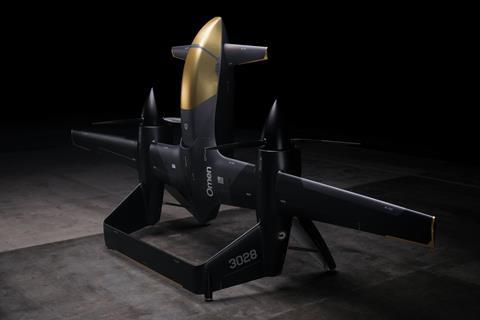
Al Zaabi describes the new venture with US manufacturer Anduril Industries to develop a vertical take-off and landing uncrewed air vehicle as “something we are super excited about.” Anduril, he says, “shares our culture and mindset”, which will allow EDGE to “directly address” DoW requirements.
EDGE, says Al Zaabi, is “globally, one of the top OEMs in the world. Our ambition is to maintain that trajectory to the top of the leader board”. However, despite the backing of the UAE, one of the richest nations per capita, he insists that the company gets no free passes and must strive hard to achieve its goals.
“We have an extremely demanding end user that has access to most of the technologies in the world, so they impose a high bar. They push us hard to provide the right solution,” he says.
“They are a customer that is tech-savvy but also extremely commercially aware, and one that is thinking decades down the road. It means we come out of it really honed to address global demand.
Maintaining an EDGE
The UAE defence house’s innovative, disruptive and affordable technologies are helping equip customers with the assets they need to protect their national security, as more industry players around the world line up to be part of the six-year-old group’s success, says its CEO
- 1
- 2
- 3
- 4
- 5
 Currently
reading
Currently
reading
Making a difference