




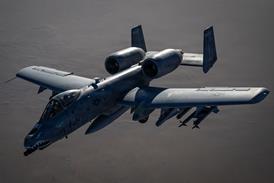

















With almost every country facing pressure on defence spending, dealing proportionally with security risks is vital. That is where EDGE can help, with value for money solutions to confront a range of threats, such as relatively unsophisticated armed drones fired en masse against a target
Speak to any defence minister and they will admit to three objectives: to maintain an effective deterrence against a wide range of threats by having the best equipment available for their armed forces; to procure as much as possible domestically to ensure national sovereignty; and to stick to a budget.
Of course, those aims require the sort of political and economic trade-offs that lead to sleepless nights. No country can afford every capability it might like – fifth-generation fighters and aircraft carriers are out of reach for most. Seeking best value and addressing the most pressing national security risks is crucial.
Where you buy is also important. Most countries would love to source as much as possible from national industries. This secures supply chains; retains valuable intellectual property (IP) in-country (or allows states to choose with whom they share it); and creates high-tech jobs and the potential of export revenue.
However, not even the world’s military and industrial powerhouses, such as the USA, have the luxury of a purely domestic supplier base. Investing in home-grown technologies and infrastructure is expensive and takes time, even for those who can, in theory, afford it.
Usually, the law of comparative advantage, or simply the fact that no national expertise or manufacturing base exists, compels countries to look for more economic and efficient solutions abroad.
AFFORDABLE DEFENCE
There is also the question for politicians and armed forces chiefs of lethality imbalance. Recent conflicts, such as that in the Red Sea, have shown the deadly effectiveness of relatively low-cost loitering munitions and other armed drones, and raised the question of how to counter them.
One answer has been to deploy billion-dollar air defence systems, designed to deal with the threat of highly sophisticated long-range cruise missiles rather than so-called kamikaze drones, mass produced for a few thousand dollars each and fired in swarms. Effective perhaps, but hardly value for money.
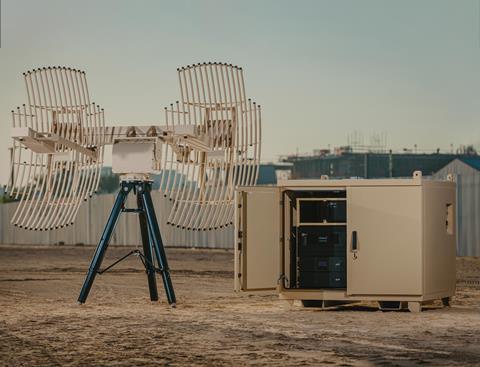
This sledgehammer-to-crack-a-nut quandary faces growing numbers of countries as they reassess the airborne threats they face. And it is one EDGE is determined to address with, among other offerings, its affordable counter-UAS systems.
“Countries need a full spectrum of solutions,” asserts Khaled Al Zaabi, president of EDGE’s Platforms & Systems cluster. “You don’t need a [Lockheed Martin] F-16 or a [Raytheon] Patriot to take out a Shahed [Iranian-made drone].”
Seeking best value and addressing the most pressing national security risks is crucial
He adds: “The counter solution should always be cheaper to deploy than the threat. The solution is not a battery of missiles unless the threat is an enemy fighter or a strategic missile. No one glove fits all. It’s all about providing a solution in a cost-effective manner.”
Although EDGE provides counter-UAS systems that destroy the target, when it comes to swarming attacks, confusing or disabling the drone is often a more desirable approach, he says, and that is where directed energy weapons or DEWs come into play.
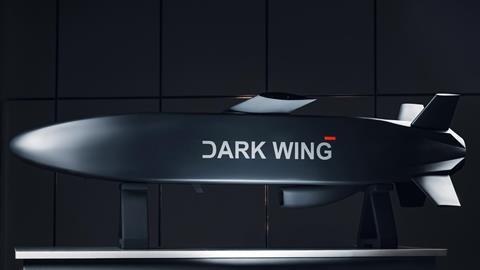
Another example of a new, technologically disruptive solution that offers customers a cost-effective and highly versatile option to strike strategic targets is DARK WING, a high-speed, precision, multirole guided munition that can be launched from air or ground.

“DARK WING isn’t just another missile,” says Al Zaabi. “It’s a new family of effectors designed to change how we think about precision strike. It combines modular seekers, configurable warheads and multiple deployment options, and can conduct different mission sets without a different platform for every role.
That versatility is what makes it truly highly cost-effective. With every component built on EDGE technology, it remains sovereign, scalable and compatible with existing systems. It blurs the line between drones and missiles and brings industrial scale, flexibility, and affordability to a market that has long been defined by single-purpose solutions.”
As part of its focus on value, EDGE stresses its ability to deliver price-competitive solutions and dependable delivery schedules because of its vertical integration, whether that is engines built in-house by its new POWERTECH entity or controlling the supply chain through its parts manufacturing unit EPI.
EDGE has invested heavily in developing its own capabilities since its formation in 2019. As well as POWERTECH, it has set up a dedicated test and evaluation facility on an island off the coast of Abu Dhabi, XRANGE.
To the outside world, EDGE may be a defence contractor, but underneath it is a tech business
Under its president of Technologies and Industrialisation, Dr Chaouki Kasmi, EDGE has devoted considerable effort to research and development, establishing centres of excellence for electro optics and radar and electronic warfare, as well as its Learning and Innovation Factory (LIF), a crucible for new shopfloor ideas.
Part of Kasmi’s remit is to drive down the cost of manufacturing and of bringing new products to market by streamlining the industrialisation process under what are known as industry 4.0 principles, and LIF plays a role in this.
“There is a huge acceleration in this area,” he says. “It’s easy to talk about industry 4.0, but it’s difficult to adopt and design new techniques without this sort of internal test facility, or sandbox. It is a way of trying out innovations before adopting them across the organisation.”
Process innovation, six sigma principles, rethinking shopfloor design, adopting robotics into production lines – all can be piloted at LIF. “We are ready for whatever wave hits us,” he says.
Artificial intelligence too plays a part in his industrial revolution. “It is never ending because every day there is another innovation in AI,” he says. “We are looking at the use cases for AI across all our entities.”
To the outside world, EDGE may be a defence contractor, but underneath it is a tech business, he says: “We are leading the way in the likes of AI, quantum, and new generation materials. All our cluster presidents are technology experts and enthusiasts.”
Despite this, there are times when EDGE has decided not to do everything itself, but to look overseas to fill technological gaps in its portfolio. “Three years ago, we mapped out what capabilities we were missing, explains Rodrigo Torres, group chief financial officer.
“If we’d waited to develop that expertise in-house, we might have taken years. So instead, we started to identify those companies that could accelerate our progress,” he says.
STRATEGIC PARTNERSHIPS
EDGE’s approach to acquisitions and collaborations has also established strategic industrial footholds in key export markets. And it has given those companies partnering with or joining EDGE the opportunity to harness capital and resources while retaining IP and securing or creating jobs.
The past three years alone have seen EDGE add more than a dozen foreign companies to its roster either through joint ventures or majority stake acquisitions – where the seller keeps its management team and identity.
Purchases have included autonomous land systems manufacturer MILREM ROBOTICS of Estonia, and Switzerland’s ANAVIA, which makes vertical take-off and landing systems of up to 750kg for missions such as surveillance, mapping, inspection and light cargo.
ANAVIA’s key products include the HT-100 unmanned rotorcraft, capable of carrying loads of 60kg, and its larger sibling, the HT-750, with a payload capability of 750kg. Both types are projected as replacements for manned helicopters.
In Brazil, EDGE acquired 51% of CONDOR, a specialist in non-lethal technologies, and a 50% stake in smart weapons developer SIATT, while its recent joint venture partners include Spanish technology company Indra – to make radar systems – and Italian shipbuilder Fincantieri.
EDGE’s philosophy with acquisitions is to acquire overall control but to leave existing owners with a significant share and management in place. “We don’t try to change the company,” says Torres. “We want the existing team to stay and develop the company.”
In terms of joint ventures, motives may include helping a partner open a door to UAE and Gulf markets on one hand or giving EDGE easier access to NATO customers on the other. In other cases, it is about securing a platform to install EDGE technology.
And EDGE is still on the look-out for acquisition or joint venture targets. “We continue to seek new capabilities and products that are out there, including in segments that we are not in, like sub-sea,” concludes Torres. “Ultimately, we are looking for partners that share our spirit. It is all about win-win.”
Island of opportunity
In the shallow coastal waters southwest of Abu Dhabi city, a short drive from the E11 highway, Abu Al Abyad is the largest island in a long archipelago. Flat, sandy, and with clusters of trees and bushes, it would be largely unremarkable except for the fact that the entire 350sq km expanse is the only multi-domain training, testing, and evaluation range in the Middle East, Africa and much of Asia.
Established in 2023 on a former royal island – the palace and an uninhabited village remain – XRANGE provides local and international customers a chance to fire short-range missiles, fly unmanned and piloted aircraft, trial signal-jamming technologies, and even conduct special forces urban warfare and amphibious landing exercises. Accessible from the mainland by a single road and bridge with a succession of security gates, the facility is a safe and secure environment.
Run by a team of experienced range experts from around the world, XRANGE serves as a technology accelerator, helping engineers make evidence-based decisions about the safety and operational use of their products, fast tracking development, and shortening time to market. Its facilities include runways, firing ranges, its own dedicated airspace with an electronic warfare corridor, and a real 2.5sq km village for close-quarter battle training.
The resource is vital for EDGE’s ambitious growth plans. “This is strategic. Without this, we couldn’t proceed,” says Haitham Awinat, the acting CEO of REMAYA, the EDGE entity responsible for XRANGE. “Our mandate was to give industry fast access to testing. Now, what used to take weeks or months, booking time at an overseas facility, can be done in days or even hours.”

Because XRANGE was a “new capability” for the UAE, REMAYA began with a “blank sheet”, according to Awinat. This was a challenge and an opportunity. It had to build the site in a “very short space of time” without a template. On the other hand, REMAYA was able to include a wide range of features, which are still being added to. A “can do” attitude from the start means “we never say no to requests, unless there is a safety or environmental issue”, says Awinat.
The island’s size is one of its biggest advantages. There is room for flight trials, alongside live missile and explosive tests – weapons can be fired air to ground or even ship to shore. A drone village, with streets and alleyways created from 350 shipping containers, allows for artificial intelligence training of autonomous aircraft to recognise urban structures and patterns. This is something that is useful for both military and civil applications, such as urban parcel deliveries.
Recent expansion has included a second, 1.2km asphalt runway alongside the existing 3.8km runway, to support an expansion of uncrewed air systems operations. There are also plans for a vehicle blast and ballistics test centre to test the resilience of civilian or military armoured vehicles to withstand threats such as anti-tank mines or rocket-propelled grenades.
A development plan that kicked off in May will see the opening of more hangars, additional offices, and a second command and control centre. Eventually, there will be an accommodation block to allow visiting personnel to overnight on the island. The aspiration is to increase the proportion of international customers using XRANGE to 30% by 2028, says Awinat.
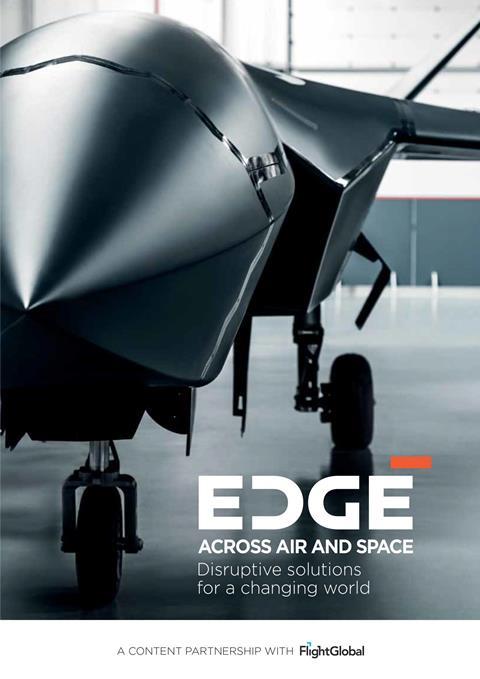
Maintaining an EDGE

The UAE defence house’s innovative, disruptive and affordable technologies are helping equip customers with the assets they need to protect their national security, as more industry players around the world line up to be part of the six-year-old group’s success, says its CEO
- 1
- 2
- 3
- 4
 Currently
reading
Currently
reading
Measure for measure
- 6