












Russia’s government has approved a new flight-safety programme on which it intends to establish a more pro-active approach to risk management in air transport.
The new framework – approved by a 23 December government order – replaces the previous state programme dating back to May 2008.
Federal air transport regulator Rosaviatsia points out that the document emphasises safety as a “priority in all decisions”, across the entire aviation chain, and the “systematic identification” of hazards before accidents occur.
Rosaviatsia also stresses that a transition to “measurable goals” is a crucial part of the new programme.
“For the first time, indicators for an acceptable level of flight safety are set at the government decree level,” it says.
“These indicators will allow us to evaluate the effectiveness of measures taken and maintain risks at an acceptable level.”
The government order states that a flight-safety performance assessment will be conducted annually, before 1 March each year, by the ministry of transport.
This assessment will include analysis as the extent to which the programme’s action plan has been implemented and its objectives achieved, relative to “acceptable flight-safety indicators”.
Based on the results, the government will update the programme by 1 July.

The order also says aviation safety legislation will be revised, based on ICAO standards and “best global practices”, and the effort will be supported through annual all-Russian conferences, incentives for improvement, and the publishing of an “open report” on the state of flight safety.
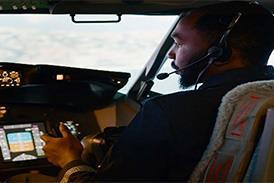
According to the order, measures will include reinforcing training for pilots – particularly in resource and capability management, and the development of behavioural skills to handle emergency situations.
It will seek to gather data to analyse flight safety, and encourage operators to implement flight-data monitoring to identify potential hazards.
The programme wants to develop a “culture of voluntary reporting” of incidents and risks “without fear of unreasonable punishment” – stressing the “clear distinction” between human error, negligence, and violation of mandatory requirements.
According to the order, the programme’s priorities also cover strengthened oversight of the “authenticity of civil aircraft components” as well as increase levels of automation for civil airfield equipment.
Rosaviatsia says the document sets out a framework for a “modern, pro-active approach” to managing risks, and provides a “sustainable foundation” to improve flight safety over the next decade.