
















Rolls-Royce’s near-term priority will remain the “operational execution” needed to deliver a series of durability improvements across its in-production Trent family of widebody powerplants before turning its attention to new products, according to its commercial engines chief.
Speaking at the Dubai air show on 17 November, Rob Watson, president of civil engines at the UK propulsion specialist, said its focus is “about making sure we complete the programme of work” that has been committed to.

That includes a three-phase durability enhancement package for the Trent XWB-97 on the A350-1000 to double time-on-wing in harsh operating conditions. Currently in testing, service entry for the third step is due in 2028.
But asked whether Rolls-Royce would contemplate a thrust increase on the XWB beyond its current 97,000lb (431kN) maximum to support a potential further stretch of the A350, Watson demurs.
While he says that “we regularly have discussions on product strategy, how we see the market developing”, it is not the firm’s immediate priority.
“I know inevitably in an air show, it’s all about the future and all about orders, but actually in my in-tray, it’s all about operational execution.
“Part of the transformation for Rolls-Royce is about delivering our commitments, hitting our schedules, getting done what we said we would get done, and just having a very robust, reliable set of products that sell really well.”
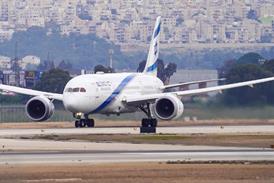
Besides the changes to the Trent XWB-97, Rolls-Royce has also implemented improvements to the high-pressure turbine on the Trent 1000 for the Boeing 787, recently unveiling a new build standard called the XE.
These enhancements make the Trent 1000 XE a “very competitive engine” and Watson hopes it will help Rolls-Royce claw back ground lost to the rival GE Aerospace GEnx, which now has a share of around 75% on the Dreamliner.
“We have been very clear: we want to build market share. We work very closely with the Boeing team… and we are really looking forward to getting some campaign wins under our belt and building market share for the 1000.”
He maintains that the in-service results of similar improvements on the related Trent 7000 for the A330neo, showing a tripling of time-on-wing, indicate strong potential on the 1000.
Additionally, a new variant of the A350-900-powering Trent XWB-84 entered service earlier this year. Rolls-Royce claims a 1% fuel-burn saving from the model, called the EP, over the baseline engine.
However, it continues to produce both the standard XWB-84 and the EP variants “and we’ll continue to do that for a while” as it still has “some contractual commitments to deliver”, says Watson.
In the background, however, Rolls-Royce will continue to mature its UltraFan geared-fan technology through two demonstrator engines – one for widebodies and a second for single-aisles.
Although often seen as engine programmes in their own right, Watson is at pains to point out that they offer a suite of technologies that it can roll back into the in-service fleet.
Some of these have already been used for the ongoing durability upgrades and “I would expect though the next five to eight years we’ll talk about how more of that technology we’ll mature on UltraFan pulls through to the current fleet”.