










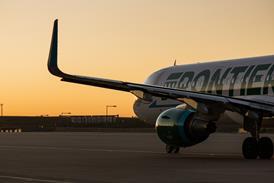


Southeast Asia is set to become an increasingly competitive market for large tactical transports and tankers, amid efforts to replace ageing airlifters and enhance military capabilities.
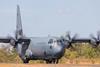
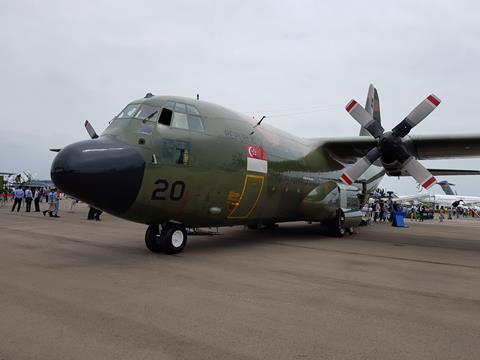
The Lockheed Martin C-130 is a routine visitor at every Singapore air show. The Republic of Singapore Air Force (RSAF) invariably displays one on static, as do other air forces that attend the event, including the US Air Force with C-130Js.
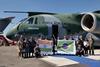
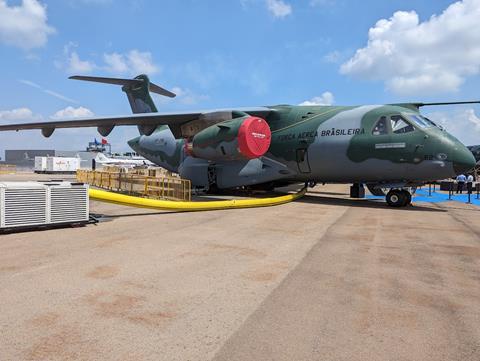
Other visitors include the Airbus Defence & Space A400M, which Airbus has promoted in the region, as well as the Embraer C-390, which made its first Asia-Pacific foray at the Singapore air show in 2024, appearing in the show’s static park.
Transports perform a range of military roles for the region’s militaries, not least disaster response. Key assets are the C-130 Hercules and twin-engined Airbus C295, which are essential for logistics and island-hopping missions due to their ability to land on short, unpaved runways.
Although the legacy C-130 fleet has ruled Southeast Asian skies for decades, the type is showing its age, creating a replacement opportunity either with the modernised C-130J or newer types such as the A400M and C-390.
Cirium, an aviation analytics company, indicates that there are 80 large tactical transports operating with the 10 countries that form the Association of Southeast Asian Nations (ASEAN) regional grouping.
The most common large tactical transport is the venerable C-130, with 64 examples in service. Apart from Indonesia’s five new C-130Js, the vast majority are older aircraft. If Indonesia’s C-130Js are excluded, the average age of the ASEAN members’ C-130s is 45.5 years: far older than the crews that operate the aircraft.
In addition to creating a replacement market that is particularly lucrative for a newcomer like the C-390, this aged fleet creates significant demand for upgrade and sustainment work. Southeast Asian countries continue to enhance the capabilities of their legacy C-130s, with structural updates and avionics improvements.
The C295 is also well represented, with 22 examples in service with five operators: Brunei, Indonesia, the Philippines, Thailand and Vietnam. Unlike the region’s Hercules, the C295 fleet is relatively youthful, with an average age of just 9.1 years.
Finally, the region’s large transport fleet is rounded out by five A400Ms, of which four operate with Malaysia and one with Indonesia.
As for tankers, the region’s evolving fighter fleets suggest a respectable market for aircraft that enable greater tactical flexibility, namely the A330 Multi-Role Tanker Transport (MRTT) or the Boeing KC-46. Based on popular civilian airliners, both types offer impressive cargo and passenger transport capabilities in addition to their tanking capabilities. Mission flexibility is a key consideration for air forces operating on constrained budgets.
Despite the region’s vast size, however, Southeast Asian air forces operate just 16 aircraft that have a primary tanker role. Singapore – despite being the region’s smallest country – is by far the most prolific operator of tankers, with six A330 MRTTs as well as five C-130s that are listed as having a primary tanker mission.
The Royal Malaysian Air Force (RMAF) has four C-130s with a primary tanker role, while Indonesia has just one. Every primary tanker in the region also serves as a secondary multi-role transport.
No Southeast Asian nation, arguably, has made more progress with updating its transport fleet than Indonesia. The need for updates was clear: in the early 2000s and 2010s Jakarta’s legacy C-130 fleet was beset with safety and sustainment issues, including fatal crashes in 2009, 2015 and 2016 with a total of around 250 killed.
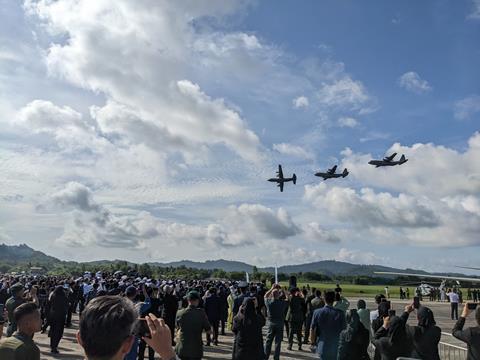
Late 2019 saw Jakarta order five C-130Js, all of which were delivered by mid-2024. The aircraft have already made an impact, participating in humanitarian efforts for Gaza in 2024, as well as relief flights closer to home in the Indonesian archipelago. The aircraft were also part of 2025’s Super Garuda Shield exercise with the USA and Australia, dropping paratroopers and equipment into contested areas.
While the Indonesian air force has benefited from the arrival of the C-130J, it continues to operate 17 legacy C-130s: 15 H-model examples and two Bs. The average age of this fleet is 48.6 years, with the oldest aircraft being a 66-year-old C-130B.
In October 2024 Indonesian Aerospace announced a major modernisation effort for Indonesia’s C-130s. The project, covering nine legacy aircraft, involves replacing their centre wing boxes and updating avionics.
Indonesia’s GMF AeroAsia, a unit of national carrier Garuda, is involved in a separate upgrade programme for Indonesian C-130s. This will see eight aircraft get new centre wing boxes, with seven also getting an avionics update.
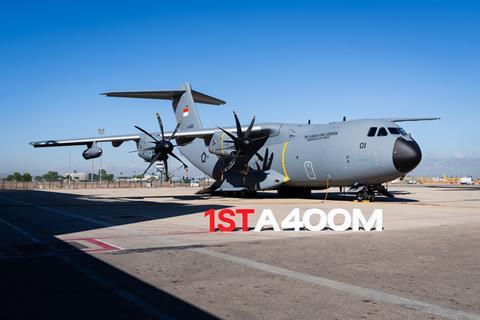
In a key modernisation, the Indonesian air force received the first of two A400Ms in November 2025, making the Southeast Asian nation the 10th operator of the type. The second aircraft is due in 2026. At the delivery ceremony for the first aircraft at Jakarta’s Halim air base, Indonesian President Prabowo Subianto told reporters that negotiations are underway for four additional aircraft.
The type’s big payload, long range and ability to operate from austere locations will provide a major boost to Jakarta’s airlift capacity.
At the time of the November delivery, Airbus said that Jakarta will evaluate a roll-on/roll-off firefighting kit for the aircraft, which would allow it to drop up to 20,000 litres (5,280USgal) of fire retardant or water.
More importantly, Indonesia’s A400Ms come equipped with underwing hose-and-drogue pods for refuelling combat aircraft. Prior to the A400M, Indonesia’s tanker need was filled by a lone KC-130B that is 64.5 years old.
One big question is whether Indonesia will order the A330 MRTT. In September 2023 the country’s defence ministry issued a somewhat confusing statement, indicating that four Airbus types were in “effective contract” with Jakarta: the AS565 Panther naval helicopter, A400M, H225M rotorcraft, as well as the A330 MRTT.
At that time, the AS565 and H225M were already in service with Indonesia, with the A400Ms on order. Curiously, there was no formal commitment for the MRTT at that time, and none has been announced since.
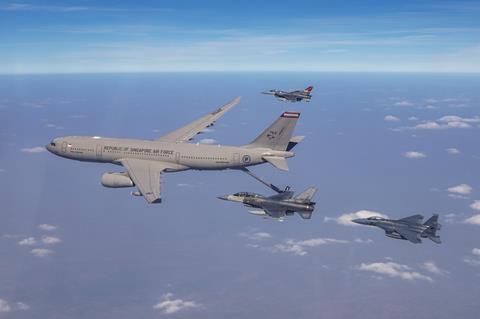
Given that Jakarta is conducting a major upgrade of its fighter fleet with 42 Dassault Aviation Rafales, however, it would make sense to also enhance its tanker capabilities.
Indonesian fighter pilots are acquainted with the A330 MRTT following an exercise with the Royal Australian Air Force in August 2023, when a KC-30A – the Australian designation for the platform – refuelled Indonesian Lockheed F-16s near the popular resort island of Bali. Over 60 F-16 sorties were flown, with 200 successful refuelling boom contacts made. Sorties were conducted during both the daytime and at night.
Malaysia’s transport fleet comprises four A400Ms and 14 C-130Hs. The A400Ms, delivered from 2015-2017, allow Kuala Lumpur to rapidly move equipment and personnel across the South China Sea between peninsular Malaysia and the provinces of Sabah and Sarawak on Borneo.
The average age of the RMAF’s C-130s is 41.7 years. While the majority of the fleet is dedicated to the transport mission, four aircraft serve as tankers, and one provides a maritime patrol capability. Malaysia has considered replacing the aircraft, but funding constraints suggest that its C-130s will still serve for some years to come, with updates to keep the aircraft relevant.
The Philippines is also working to update its transport fleet. Manila’s Hercules operations were marred in July 2021 when a C-130H crashed while attempting to land at Jolo airport on the island of Sulu, killing a total of 53 – 50 military personnel on board and three on the ground. The aircraft involved had been transferred from the US Air Force (USAF) just five months earlier.
Two years later, in 2023, Manila ordered three C-130Js. At the time of the order Lockheed said the aircraft would arrive in early 2026.
For the time being, Manila operates five legacy C-130s: one B, two Hs, and two Ts. One of its in-service C-130Hs was transferred from the USAF in early 2024. This was part of a 2023 deal in which the US government said it would provide three C-130Hs to the Philippines. The second and third aircraft have yet to arrive.
One of the C-130Ts has an additional intelligence, surveillance and reconnaissance role. During an upgrade in the 2010s, it received an Elta Systems ELM-2022ML maritime surveillance radar, an electro-optical/infrared turret, and enhanced communications.
The Philippines also has five C295s with an average age of 7.5 years.
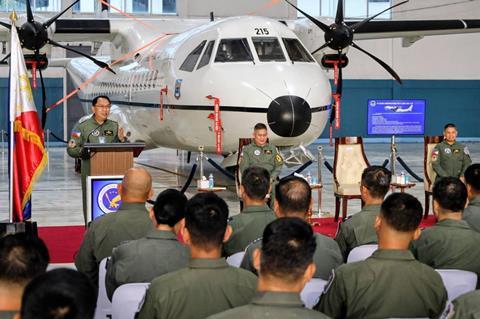
Another major Southeast Asian C-130 operator is Thailand, which operates 12 C-130Hs with an average age of 38 years. The fleet has seen substantial upgrades over the years, including the installation of glass cockpits, upgraded Traffic Alert and Collision Avoidance Systems, and new mission computers.
Although Thailand’s 2020 defence white paper called for the replacement of the C-130H fleet in the 2022-2029 timeframe, its 2024 white paper walked this back, calling for the fleet to remain in service with updates.
In September 2025, Rolls-Royce said the Royal Thai Air Force (RTAF) is the first C-130H operator in the region to receive the T56 Series 3.5 engine upgrade. The company states that the upgrade improves reliability, cuts costs, and will extend aircraft service life to at least 2040.
Nonetheless, Lockheed will be keen to promote the C-130J to the RTAF, while both Airbus and Embraer are certainly keen to pitch their offerings.
Although traditionally a user of Russian equipment, Vietnam has started moving its tactical transport fleet in a decidedly western direction, operating three C295Ms and three Indonesian-built NC212is.
FlightGlobal understands that there is a desire for additional tactical transports. Media reports have suggested that Hanoi might even obtain the C-130J. At a 2024 defence event in Hanoi, companies such as Airbus Defence & Space, Boeing, Embraer and Lockheed were in attendance.
Brunei is also an operator of the C295, with two new examples in service and two on order. The USA cleared the sale of a single C-130J to the Southeast Asian kingdom in 2014, but Bandar Seri Begawan never followed through with an order for the type.
Another tiny Southeast Asian nation, Singapore, has one of the region’s most capable tanker and transport capabilities with its six A330 MRTTs. The fleet is young, with an average age of 8.6 years.
Moreover, the RSAF has helped to explore new concepts in tanking, namely automated refuelling. In 2021, Airbus and the service completed flight trials of an automatic refuelling system for the A330 MRTT. In 2024, the RSAF said that the type had supported deployments globally and humanitarian and disaster relief work.
A bigger question related to the RSAF is the fate of its 10 C-130s, the average age of which is 52.7 years. Though the aircraft have been maintained well and received updates over the years, eventually Singapore will need to decide on a new type.
When asked about specific capabilities, such as its tactical transport plans, Singapore’s defence ministry tends to reply that it is always assessing existing and new capabilities.
While the C-130J is certainly a strong candidate for Singapore’s next tactical transport, the A400M and C/KC-390 are also viable options. The speed of the jet-powered C-390 would allow Singapore to more rapidly shift forces based overseas back home in the event of a regional contingency.
Airbus, Embraer and Lockheed will certainly be on hand at this year’s Singapore air show, but visitors should not expect any order announcements around the country’s next transport. Singapore takes a low-key approach to announcing defence acquisitions. If an announcement comes, it will likely be just one or two lines of a defence minister’s speech in parliament.
The competition for Southeast Asia’s transport and tanker market will intensify in the coming years as the region’s ageing fleets reach the end of their operational lives. With the average C-130 in ASEAN service now over 45 years old, the window for replacement is narrowing. The choices made by major operators like Indonesia, Singapore and Thailand will likely influence procurement decisions across the region, particularly as countries seek aircraft that can perform multiple roles on limited budgets.
What remains clear is that Southeast Asia’s strategic geography demands capable, versatile aircraft that can handle everything from disaster relief to combat support. Whether nations opt for proven workhorses like the C-130J, embrace newer platforms such as the C-390 and A400M, or expand their tanker capabilities with the KC-46 or A330 MRTT, the decisions made in the next few years will shape the region’s military airlift capabilities for decades.
For manufacturers, the stakes are high: orders for new tactical transports will underpin long-term business relationships.